Post-Progressive Art

Since New Labour’s Cultural Revolution in 1997, art education in the UK has been firmly tilted towards ‘social progress’. I know this as my lecturer said as much in the introduction to my Fine Art degree the following year. This implied that, while PM Tony Blair wanted fifty percent of British youth to attend university, an arts education was only of use if it was in the ‘social good’, or good for business. Art as industrial lever in other words.
Beyond the business of fashion design, graphic design and film etc, socially progressive organisations quickly realised that there was a big pot of cash in presenting ideas that were in the social good. As the millennium turned, and Blair’s Third Way plans progressed themselves, identity politics started its putsch on western culture. This meant if your art project could show it was representing those with ‘protected characteristics’, i.e. women, non-whites, the disabled, gay, trans and so on, cash funding was all but guaranteed, thus paying mortgages.
The right, to an extent represented by the Third Way, were left floundering by Blair’s determination to push all this through, at least until he started to flag later in the 2000s. With this flagging came ‘intersectionality’, which was a collective rounding up of progressive leftist interests: if you were an activist for Black Lives Matter, you needed to automatically support trans rights; if you were staunchly pro-Palestinian, you needed to also campaign for body positivity. Anyone unsure about joining seemingly disparate interests would be silenced or sometimes ‘cancelled’ by a compliant media, who saw the click-value, necessary for advertising cash, in these new ‘culture wars’.
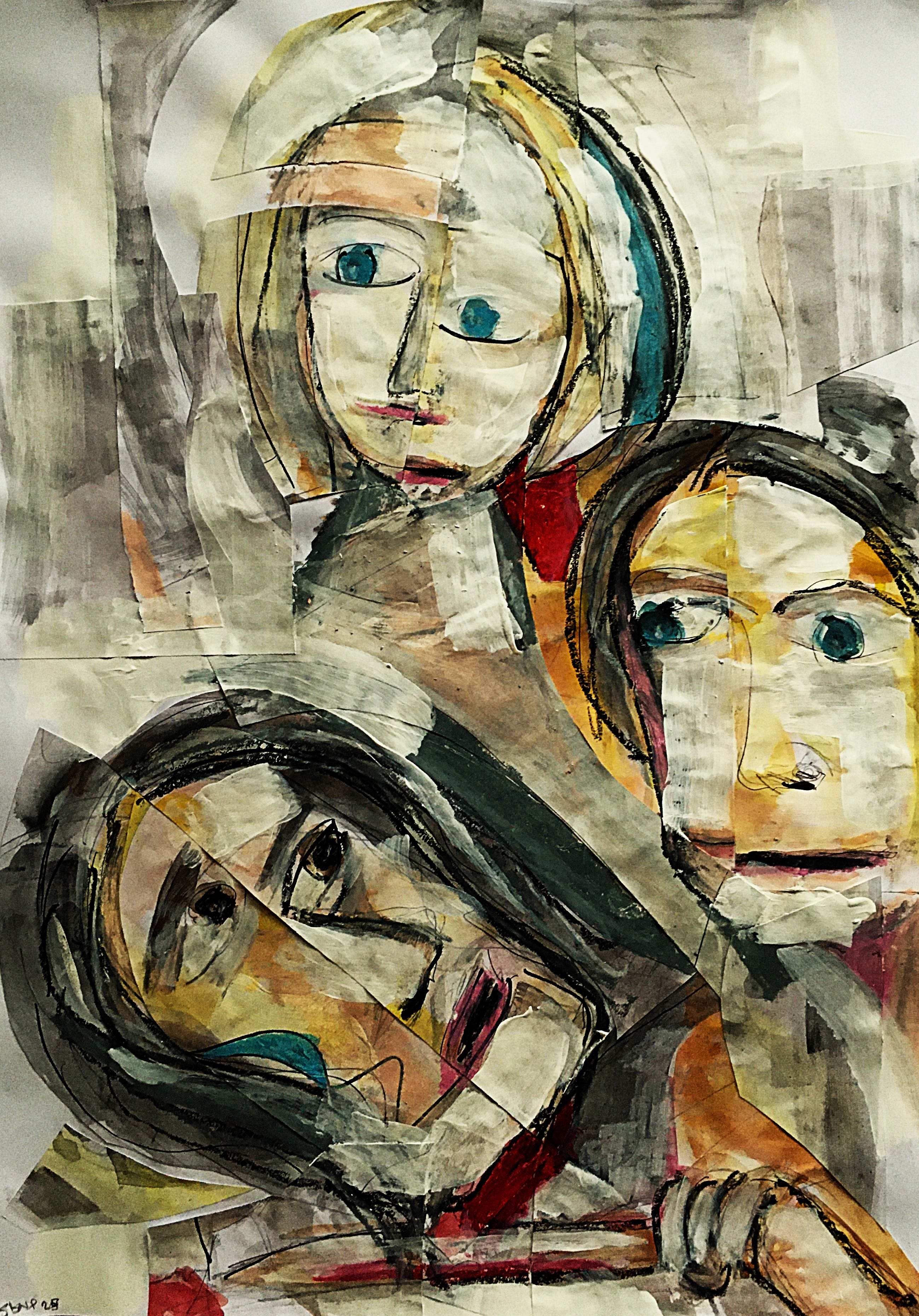
This system-wide takeover by social goodwill of course affected what art ‘looked like’, in the ubiquitous vernacular of irritatingly contagious journalese. What it tended to actually look like was artists encouraged to make their art about their racial or sexual characteristics, and national identity (as long as that wasn’t white western identity).
There is nothing wrong with an artist from Africa making art about Africa, but when the only way this would be let past the gatekeepers was if it highlighted historical western oppression it quickly became art-as-lecture, the (mainly white, western, middle class) observers with their cultural cringe ready in their handbags. Ditto for sex, gender and sexual orientation.
The lived experience of womanhood went along with affirmative action in employment and the gender pay gap on Radio 4, and in the art world as if Bridget Riley, Maggi Hambling and Tracey Emin hadn’t been award-winning big-hitters for many decades. Identiarianism in art was and is as closely linked to feminist readings of English Literature and decolonialisation elsewhere in the humanities, until people realised that if it wasn’t written by or for a woman, then seeing thing through an academic feminist lens possibly wasn’t the best way to sup from the teat of art.
So in the mid 2020s, ten years after Brexit and the first Trump election, years on from the #MeToo, BLM and Covid social experiments, creatives are finally looking beyond the political binaries of childish idealism and are once more searching for the blood and guts of expressive life that art once was. This was an art unencumbered by such thoughts as the relationship between gallery owner, artist and buyer, or what social point a piece of art was trying to make. Sloganeering is fine when Jeremy Deller is doing it in his playful way, but when it becomes the only artistic currency in town it can get pretty wearying.
While it is still important to reflect the world in which the artist is living, his or her moral judgement on that world has been found to be pretty myopic and wanting. No one wants a race-to-the-bottom art which endlessly goes on about the artist’s trauma and oppression based on their identitarian characteristics - there are plenty of critics around to work those angles if they feel their editors require it.
But ultimately art needs to free itself of the shackles of moralising progressivism in the manner Friedrich Nietzsche demanded for mankind in response to the restrictions of Christianity: There are more things to make art about in heaven and Earth than are dreamed of in your gender studies textbooks.
Sean Bw Parker’s books are available here: https://www.amazon.co.uk/stores/author/B06XZ76F5Y